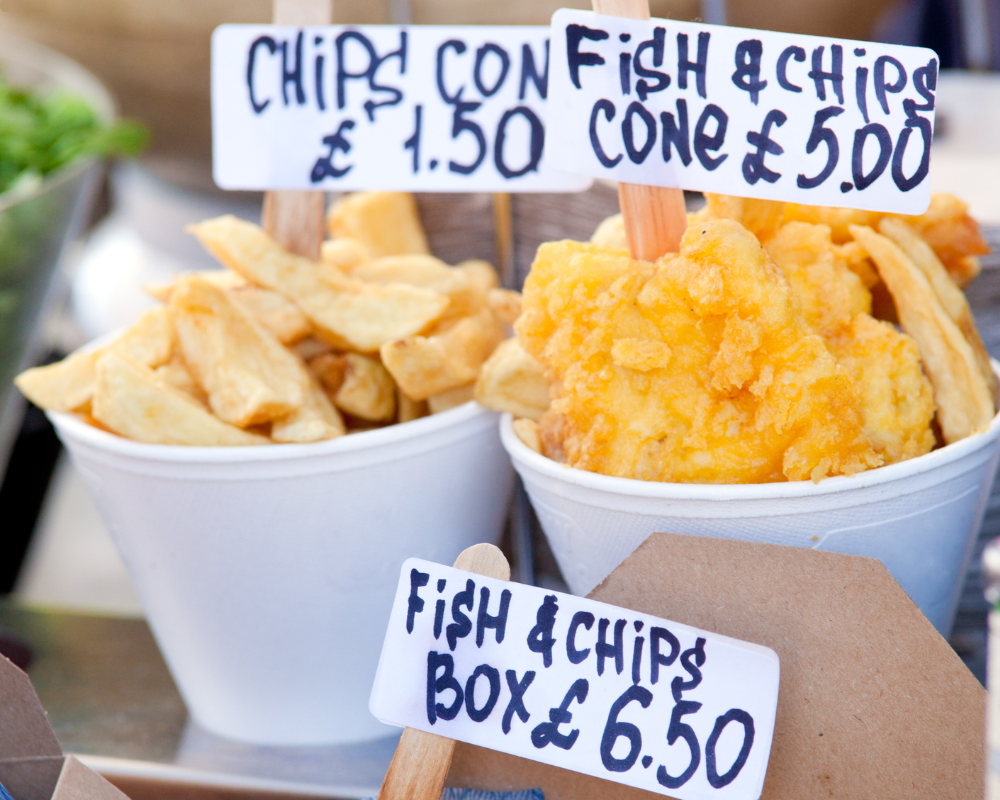
In the UK food sector, with rising costs and increasing pressure on margins, discounting can feel like an easy way to drive trade. When profits are tight, it can be a quick method to keep customers coming in, especially for fish and chip shops. A short-term price drop or limited-time deal could boost sales for a short time, but the long-term effects are usually not as good as they seem.
Fish and chips have never been about being the cheapest option available; it has always been about value. Customers are generally happy to pay a fair price when they feel confident in what they’re buying. When discounting becomes a habit, problems happen, and over time, this squeezes margins and puts standards under pressure.
Below, we will talk about what truly affects the fish and chip UK price trade, how growing costs affect margins, and why maintaining standards is a better long-term approach than lowering prices.
Fish and Chips Prices in the UK: What’s Really Driving the Cost?
The cost of fish and chips has gone up gradually over the past few years, and for good cause. Fish and chip shops are confronted with steady rises in practically all of their costs. The price of fish changes depending on the season, quotas, and fuel expenses. Energy prices are still unstable. The expenses of labour keep going up, and so do the costs of packaging, rent, and insurance.
Another big factor is frying oil. Oil is an important part that changes the taste, look, and texture of food. Some chippys are motivated to extend the life of oil or lower its quality when costs go up, but these choices typically hurt the value that customers are paying for.
Customers are aware of the widespread price increases, but they are also becoming more selective. They want to see through things, know what to expect, and feel that the product is worth the money. They can get confused and lose faith when prices change suddenly or aren’t consistent. This is especially true when quality changes at the same time. When the price is right for the quality, resistance is usually lower than many operators think it will be.
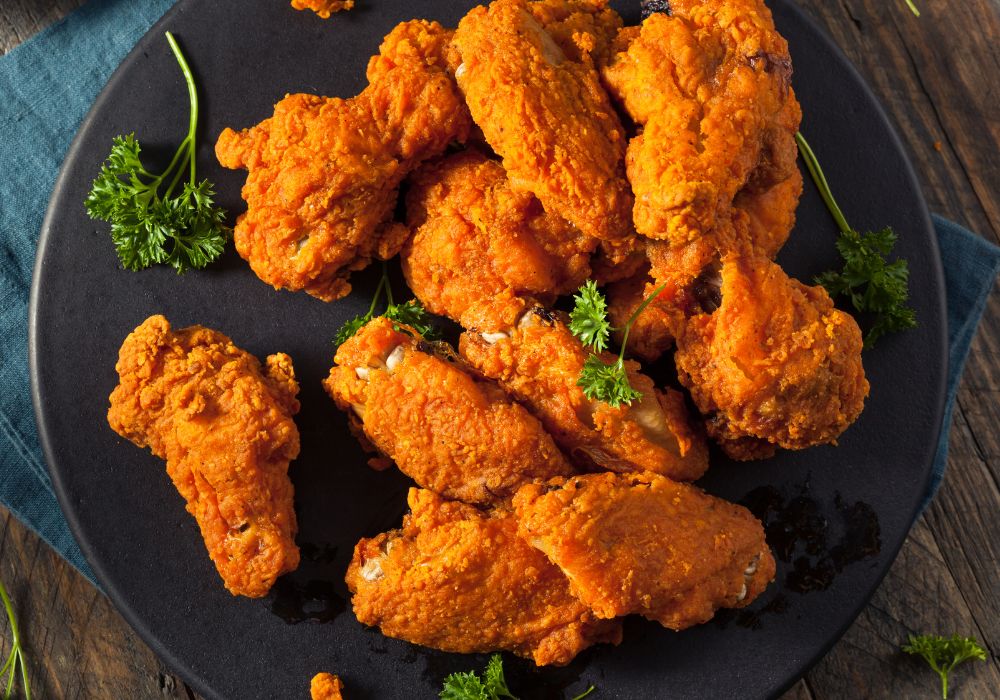
Customers feel good about the fact that the portion sizes are always the same, the flavour is clean, the batter is crisp, and the chips are fried well. When every visit gives the same consistent result, customers are much more likely to pay extra for fish and chips.
Understanding Fish and Chips Profit Margins
In actuality, the typical fish and chips profit margin is often smaller than it seems. Even while the headline pricing looks good, the costs of ingredients, labour, utilities, and trash quickly eat into the profit margins. Small problems that happen over and over throughout a busy week can add up to a big problem.
Discounting makes margins even smaller. When the price goes down, the costs don’t always go down too. This means that every part that is on sale contributes less to overhead costs. Over time, this puts a strain on cash flow and makes it more important to rely on volume than value.
Businesses that last know how to read their numbers. They keep a strict eye on waste, oil use, portion management, and yield to safeguard the overall profit margin on fish and chips without lowering quality.
The Hidden Cost of Discounting
One fish and chips discount might not seem like a big deal, but if you keep offering them, customers change their behaviour and operations become more difficult. Here’s why fish and chips discounts become unsustainable:
- Regulars start to put off visits until the next discount comes around. Price, not quality, draws in new customers, which makes them less loyal and more likely to leave when the deal ends.
- Sudden spikes in demand put extra pressure on staff and systems, increasing the risk of mistakes and inconsistent food. Ironically, this often leads to a poorer customer experience on the very nights businesses are trying to attract attention
- Discounting is hard to undo in the long run. Once buyers have set their expectations at a lower price, it is harder to raise prices.
Chippy Menu Prices: Where Profits Can Easily Slip
You need to be very attentive while managing a chippy menu and prices. Core items may seem profitable, but margins can soon disappear if portions aren’t uniform, oil isn’t used properly, or add-ons aren’t planned well.
The fish and chips menu prices should be based on the real cost of making them, which includes the cost of oil, staff time, and waste. Adding too many low-volume items to the menu, often known as “menu creep”, can make things more complicated and less efficient.
Without having to offer discounts, clear prices, well-organised packages, and portion alternatives can help raise the average amount spent. These methods make it more likely that people will plan their purchases instead of making impulse buys.
Controlling Costs Without Lowering Quality
You don’t have to cut corners to keep costs down. In reality, the best strategy to protect margins is typically to defend quality. Regular changes, consistent frying oil management, and timely filtering all help keep the flavour and increase the life of the oil. Using the correct oil for the job helps keep costs down and quality up.
Strong operational systems are also important. Clear procedures, training for staff, and regular maintenance all help cut down on waste and downtime. Not only is it important to follow the rules, but it’s also important for customers to feel safe and confident in your cuisine. Frymax’s advice on Food Hygiene and Health and Safety in industrial kitchens is one example of a useful resource in this area.
Consistency is key. Customers return to businesses they trust, not those they happen to catch during a promotion. Strong systems, proper training and reliable processes ensure standards remain high, even when trade is busy.
Add Value Without Cutting Prices
A more sustainable approach to pricing is to add value rather than cut prices. Sharing options, meal bundles, occasion-led offers and small giveaways all help create a sense of generosity without damaging margins. These tactics encourage planned visits and higher spend, not bargain hunting.
The strongest businesses understand that discounting isn’t a strategy; it’s a short-term fix. Long-term success comes from protecting standards, delivering consistency and offering genuine value, not chasing short-term footfall.
Fish and chip shops may keep strong margins without lowering quality if they know the real costs, carefully manage menus, and secure key materials like frying oil. Going back to good principles is what sets resilient firms apart from others that are always under pressure.
Are you ready to protect your prices?
If you need help delivering consistent quality without cutting into your profits, look into the Frymax Product Line or discover more about how to handle oil. Contact the Frymax Team Today for personalised guidance on how to raise standards and protect your profits.