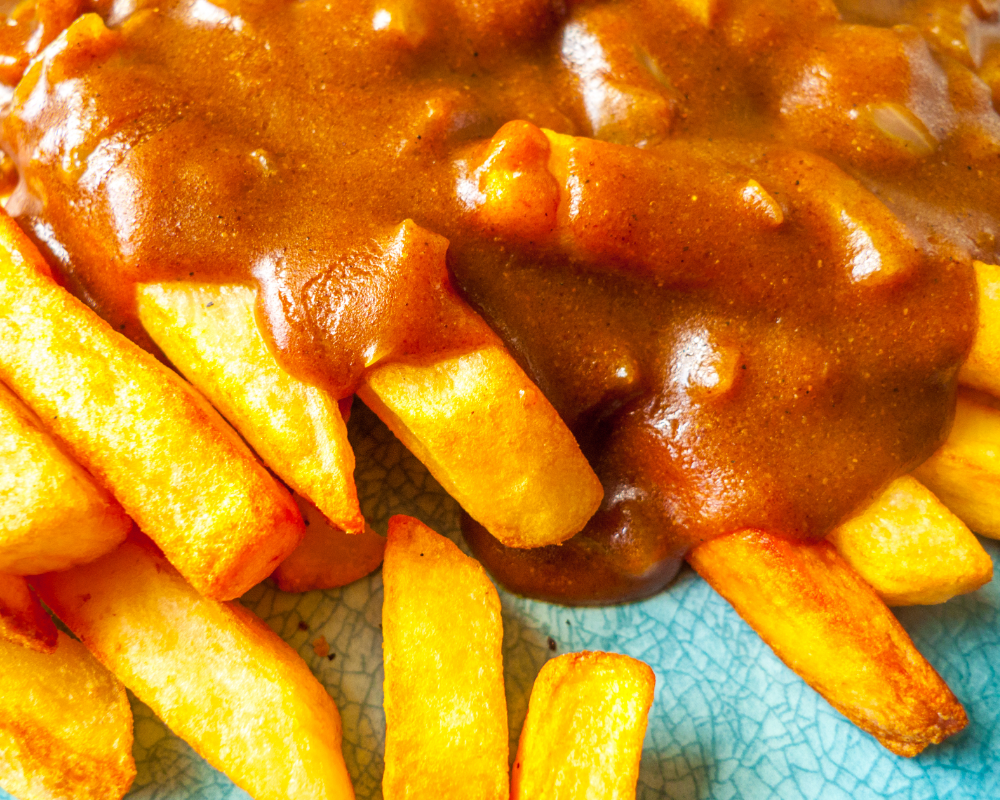
In British chip shops, curry sauce has become a silent mainstay. It may not be as iconic as a bag of chips or a battered cod, but it is a part of the whole experience. For many customers, chips with curry sauce are a non-negotiable, part comfort food, part ritual.
The great part is that making a fantastic curry sauce isn’t that difficult. Consistency, balance, and how effectively it enhances the main event are the goals. When done correctly, it adds value to your menu, enhances taste without dominating it, and provides consumers with one more reason to return.
Frymax’s scalable take on a chip shop curry sauce recipe, along with helpful advice for getting reliable results in a service setting, may just be the final piece to your menu’s puzzle.
Ingredients For A Chip Shop Curry Sauce Recipe
Simple, well-known ingredients are the foundation of a fantastic curry sauce. Accurate proportions and an awareness of the role of each component are also crucial. To create the perfect fish and chips curry sauce, you’ll need:
- Butter or oil
- Onions
- Garlic and ginger
- Mild curry powder
- Chicken or vegetable stock
- Malt vinegar
- A sweet element, such as raisins or apples
- Cornflour
- Optional spices such as turmeric or five-spice
What stands out across most variations is how restrained the seasoning is. This isn’t meant to be a fiery curry; it’s mild, slightly sweet, and gently savoury. That balance is what makes it work so well alongside fried food.
The best cooks understand that every ingredient has a purpose. The vinegar sharpens and brightens the flavour, the sweetness of the raisins or apples softens the edges, and the stock brings everything together into a smooth, cohesive sauce.
How To Make Curry Sauce For Chips (Step-By-Step)
The method is easy to follow but requires careful attention to detail if you want to prepare a chip curry sauce that has what it takes to become a customer favourite.
- Create your base: To begin, sauté onions in butter or oil over medium-low heat. You’re not looking for colour here, just softness and sweetness. When the onions are soft, add the ginger and garlic.
- Add aromatics and spices: Mix in any extra spices and curry powder. To unleash their scent, let them cook for a short while without burning.
- Add liquids and simmer: Add your stock and boil the mixture gently. Add a little malt vinegar and your sweet ingredient, such as raisins or apples. Let the flavours emerge by cooking the dish slowly.
- Blend for consistency: After everything has become soft, combine the mixture until it is smooth. To get the traditional chip store texture, thick, glossy, and consistent, this step is essential.
- Mix cornflour with cold water and stir it into the sauce. Simmer until thickened, stirring continuously. Adjust seasoning with a touch of lemon juice or vinegar if needed.
The end product should be a light, smooth sauce that has enough substance to cover chips without being too thick.
How To Scale Up Your Fish And Chip Curry Sauce Recipe
A fish and chip curry sauce recipe must work well under pressure. Making a small batch at home is one thing, but in a professional kitchen, efficiency and uniformity are just as important as flavour. Successful scaling up depends on a few fundamental ideas:
Batch Consistency
Stick to pre-measured quantities rather than estimating. When compounded over larger quantities, even little differences in curry powder or vinegar can have a noticeable impact on taste.
Managed Cooking Times
Avoid rushing the base stage. Cutting corners here will show in the finished product since taste depends on properly softened onions.
Storage and Reheating
When properly chilled and stored, curry sauce keeps well. To preserve texture, reheat slowly and stir often. Use a little stock to loosen it if it gets too thick.
Service Efficiency
Avoid boiling the sauce, which can alter consistency, and keep it heated at a steady temperature when serving. A well-run sauce station guarantees speed without compromising quality.
When made correctly, a scalable curry sauce becomes a reliable component of your business that consistently produces the same outcome.
Chip Shop Curry Sauce Variations To Try
Even while consistency is crucial, your shop’s style may allow for a small amount of diversity.
Fruit-Forward Sweetness
Some consumers like the cleaner, lighter sweetness that comes from using apples rather than raisins.
Slightly Spicy Version
A small amount of five-spice or a medium curry powder can add depth without pushing the sauce into overly hot territory.
Vegetarian-Friendly Base
Using veggie stock guarantees that the sauce is suitable for a larger variety of dishes.
Tangier Coating
The sauce can be brightened with a little additional vinegar or lemon juice, especially when combined with heavier fried foods.
Making intentional adjustments is crucial. This meal doesn’t benefit from excessive complexity; little tweaks are enough to produce a distinctive version that is still identifiable.
What’s The Best Oil For Frying Chips To Serve With Curry Sauce?
Equally crucial to serving curry sauce is the quality of the chips themselves, which ultimately depends on the oil.
Oil has a direct impact on taste, texture, and consumer perception, making it more than just a cooking medium. Even the greatest sauce can be undermined by poorly handled oil, which can result in dull colour, odd tastes, and unpredictable outcomes.
For this reason, taking good care of your oil is crucial. Maintaining standards involves keeping an eye on quality, filtering often, and knowing when to replace your oil. According to Frymax’s cooking oil management guide, good practices assist in decreasing waste and controlling expenses in addition to improving food quality.
Consistency from the first to the final order of the day is also guaranteed by using a stable, long-lasting oil. Chips are the ideal foundation for curry sauce when they are crisp on the surface, fluffy within, and devoid of unnecessary oil. Excellent chips enhance excellent sauce. One without the other will always fall short.
Putting Everything Together
Curry sauce with fish and chips is straightforward, reliable, and subtly necessary when done well. It doesn’t need to be reinvented; it just needs to be done properly every time. For operators, this entails concentrating on the basics, such as measuring recipes, preparing food consistently, and paying attention to how each component works together on the dish. It also entails realising that extras and sides are an integral element of the whole experience that buyers remember.
If you’re looking to refine your wider offering, Frymax’s quality fish and chips guide provides practical insight into delivering consistency across your menu
Reliability That Retains Clients
Consistency is the cornerstone of transforming a good recipe into a dependable component of your business, whether you’re creating a curry sauce for chips from scratch or improving an existing one. Frymax has provided generations of fryers with high-performance oil and helpful advice. Find out more about our strategy, or contact the team to find out how we can help your store. Because consumers notice and return when all the components on the plate work together.